The Truth About the Netac Zx20 Ii Portable Ssd: Pros, Cons, and Verdict
Category: Laptops
Introduction
The Netac Zx20 Ii Portable SSD markets itself as an affordable, fast external drive for users who need portable storage for backups, content creation, gaming, and travel. Portable SSDs have matured into reliable everyday tools, but not every model offers the same balance of speed, durability, and software support. This article evaluates the Netac Zx20 Ii in real-world contexts, outlines strengths and weaknesses, compares it to common alternatives, and offers practical buying guidance for different types of buyers.
What the Netac Zx20 Ii Is
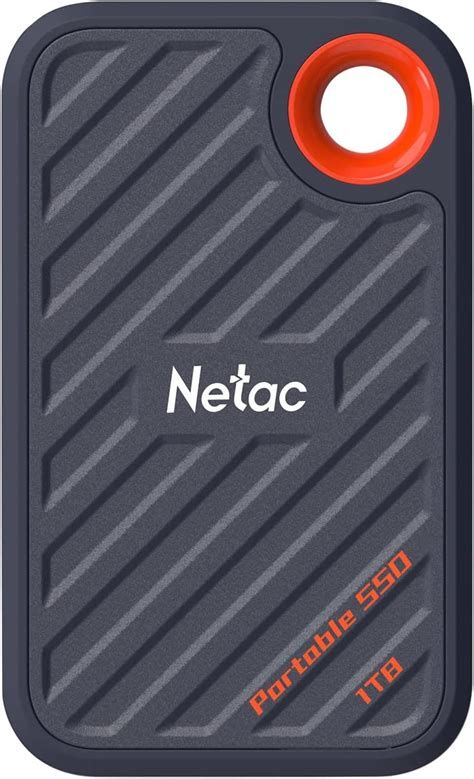
The Netac Zx20 Ii is a pocket-sized external solid-state drive that connects over USB‑C. It targets users who want faster-than-HDD transfer speeds without the bulk of a desktop external drive. It is offered in multiple capacities and is designed to serve as a portable archive, an on-the-go scratch disk for photo and video editors, and a high-performance backup device for laptop users.
Design and Build
Form factor: The Zx20 Ii follows the common slim rectangular SSD form factor that fits easily in a laptop bag or pocket. The drive typically features a brushed metal or metal-like housing that helps with passive heat dissipation and gives a more premium feeling than cheap plastic enclosures.
Ports and cables: The drive uses a USB‑C port and usually ships with a short USB‑C to USB‑C cable and a USB‑C to USB‑A adapter or cable, covering modern laptops and older machines. That universality is useful for users who move between devices.
Durability: While not explicitly positioned as an action‑proof drive, the Zx20 Ii benefits from SSD shock resistance inherent to solid-state storage. Users should not expect heavy-duty water or dust ingress protection unless a specific IP rating is listed by the manufacturer; treat it as a portable consumer device, not a rugged enterprise product.
Performance and Real-World Behavior
Performance is the anchor point for any portable SSD review. The Netac Zx20 Ii advertises significantly faster transfer speeds than spinning hard drives and older USB‑3 flash drives. In everyday usage, buyers can expect the following:
- File transfers: For large sequential files (video clips, disk images), the Zx20 Ii can approach its advertised sequential read/write numbers when paired with a USB‑C port that supports USB 3.2 Gen 2 or equivalent. Real-world speeds for such transfers are often slightly lower than peak specs due to thermal throttling and file system overhead.
- Small file performance: Copying thousands of small files (photos, documents) will be slower than copying a single large file of the same total size. This is a limitation of the underlying storage and the overhead of creating many filesystem entries. For photographers transferring many RAW images, expect slower throughput than synthetic sequential benchmarks.
- Sustained writes and throttling: As with most compact portable SSDs, sustained writes (for example, continuous recording of high-bitrate video) can cause the enclosure to warm up and, on prolonged workloads, the drive may reduce speed to manage heat. For typical bursts—backups, transfers, game installs—this is rarely a practical problem.
Practical example: A typical user copying a 50 GB project folder from a modern laptop to the Zx20 Ii should plan for a transfer time in the low minutes. If the laptop supports full USB 3.2 Gen 2 speeds and the drive is performing near its peak, the operation may finish in roughly one to a few minutes; when copying many small files or using older USB ports, expect noticeably longer durations.
Software and Compatibility
Netac usually provides basic drive management utilities for functions such as firmware updates and drive diagnostics, though availability can vary by region. The drive is broadly compatible with Windows, macOS, and many Linux distributions as a mass storage device. Buyers who plan to use the drive with consoles or cameras should check the console/camera documentation and confirm file system formatting (exFAT is a common default for cross-platform use).
Find top-rated Laptops & Computers products at great prices.
See Deals →Real‑World Use Cases
The Zx20 Ii is most useful in several common scenarios:
- Laptop backups and Time Machine snapshots: It is a convenient external target for fast manual backups and incremental snapshots when paired with the correct formatting and backup software.
- On‑location photography: Photographers who need immediate offload of photos benefit from the Zx20 Ii’s small size and speed—but should be mindful of small-file transfer behavior and consider card-to-drive workflow tools that consolidate files before transfer.
- Video editing on the go: For editors working with proxy or lower-bitrate media, the drive can serve as a portable scratch disk. For high-bitrate 4K/RAW workflows, users should verify sustained write performance for their specific codecs.
- Gaming and console storage: Many modern consoles accept external SSDs for game storage. The Zx20 Ii can shorten load times compared with HDDs, but compatibility and whether a drive can be used for primary game installations depends on console rules and required speeds.
- General file portability: For users who move large media libraries or VM images between machines, the drive offers a practical combination of speed and portability.
Pros & Cons
Pros
- Compact, pocketable design that is easy to carry between work and home.
- Noticeably faster than traditional external hard drives for sequential transfers.
- Broad compatibility via USB‑C with adapters for older USB‑A ports.
- Often available in multiple capacities to match different user needs (archive vs. active working set).
- Typically lower price point than some premium competitors, offering strong value for budget‑conscious buyers.
Cons
- Small‑file performance can be slower than sequential benchmarks suggest—relevant for photographers and document-heavy workflows.
- Sustained heavy write workloads may trigger thermal throttling in prolonged sessions.
- Manufacturer software and support may be more limited compared with larger brands that bundle advanced utilities and long warranties.
- Not explicitly a ruggedized product—users who need water, dust, or shock ratings should consider dedicated rugged drives.
Comparison: Netac Zx20 Ii vs. Common Alternatives
The following table compares the Netac Zx20 Ii with a few common portable SSD alternatives. Values summarize typical traits buyers care about; exact numbers depend on specific configurations and firmware revisions.
| Model | Interface | Typical Advertised Read Speed | Capacities | Hardware Encryption | Warranty | Best for |
|---|---|---|---|---|---|---|
| Netac Zx20 Ii | USB‑C (USB 3.2 Gen 2 compatible) | Up to ~1000 MB/s (advertised depends on capacity) | 256GB / 512GB / 1TB / 2TB (typical range) | Basic software-based tools (varies) | Manufacturer warranty (commonly ~2–3 years) | Budget-conscious users wanting fast transfers |
| Samsung T7 | USB‑C (USB 3.2 Gen 2) | Up to ~1050 MB/s | 500GB / 1TB / 2TB | Hardware AES 256-bit | 3 years | Everyday users who value software and brand support |
| SanDisk Extreme Portable | USB‑C (USB 3.2 Gen 2) | Up to ~1050 MB/s | 500GB / 1TB / 2TB | Optional password encryption | 3 years | Travel photographers needing a balance of speed and durability |
| Crucial X8 | USB‑C (USB 3.2 Gen 2x2 on some models) | Up to ~1050 MB/s (varies by model) | 500GB / 1TB / 2TB | Software utilities available | 3 years | Users looking for rugged aluminum enclosure and steady performance |
Who Should Buy the Netac Zx20 Ii?
The Zx20 Ii suits a range of buyers but is particularly compelling for:
- Students and professionals who need inexpensive, fast external storage for projects and backups.
- Casual content creators who edit short-form video, manage photo libraries, or need fast transfer between devices but don’t require enterprise-grade sustained-write performance.
- Traveling users who want a compact drive that fits a laptop bag and provides better performance than a mechanical hard disk.
It may be less suitable for users who need certified encryption, long-term professional warranty support, or those whose workflows involve continual high-write loads (for example, multi-camera 4K/RAW recording directly to the external drive).
Buying Guide
When deciding whether the Netac Zx20 Ii is right for a given purchase, consider the following factors that typically matter to real buyers:
1. Capacity
Choose capacity based on intended use. For simple backups and document storage, 256–512 GB may be enough. Photographers and videographers will tend to prefer 1 TB or higher. If the plan is to keep games or large media libraries, 1–2 TB is a more practical starting point.
2. Speed Expectations
Check the advertised sequential read/write speeds and match them against the ports on your laptop. To approach maximum throughput, the host device should support USB 3.2 Gen 2 or equivalent. Also understand that small-file transfers will be slower.
3. Interface and Cable
Confirm the drive’s cable options. A USB‑C to USB‑C cable is ideal for newer laptops. If the buyer uses older hardware, verify that a USB‑C to USB‑A adapter or cable is included or available.
Shop the latest Laptops & Computers picks on Amazon.
Browse Now →4. Durability and Use Environment
If the drive will be used in rugged conditions—outdoor shoots, dusty construction sites, or frequent travel—consider drives with explicit IP ratings or shock-resistant certifications. The Zx20 Ii is convenient for travel, but it should be treated as consumer‑grade storage.
5. Software and Security
Buyers who require built-in hardware encryption should verify whether the model includes AES encryption and reliable password tools. If encryption is a priority, compare the Zx20 Ii’s security features against offerings from mainstream brands.
6. Warranty and Support
Check the manufacturer warranty period and the quality of regional support. Longer warranties and responsive support can be worth a small price premium for users who depend on external storage for business continuity.
7. Price and Value
Price per gigabyte is an important metric. The Zx20 Ii often positions itself as a value player—if budget is the main constraint, it can be attractive. Balance cost against performance, software features, and warranty to determine overall value.
8. Compatibility with Devices
Confirm that the drive works with the buyer’s target devices—Windows, macOS, Linux, or consoles. If the drive will be moved frequently between platforms, choosing exFAT as a file system ensures cross-platform compatibility without large file restrictions.
Tips for Getting the Most from a Portable SSD
- Use the shortest high‑quality cable possible to reduce signal loss and maintain transfer speeds.
- Format the drive to a file system that matches the intended workflow—exFAT for cross-platform, APFS/HFS+ for macOS‑only, NTFS for Windows‑heavy use (or exFAT for cross-platform compatibility).
- For photography workflows, copy and consolidate files into a single folder before transfer to improve throughput when moving many small files.
- Avoid exposing the drive to extreme temperatures; allow it to cool between sustained heavy transfers to minimize throttling.
Conclusion
The Netac Zx20 Ii Portable SSD is a practical, cost‑effective option for buyers who want a lightweight, fast external drive without paying a premium for brand recognition. It delivers a meaningful upgrade over HDDs and older USB flash drives for daily tasks such as backups, media transfers, and casual editing. The main trade-offs are potential variability in small‑file and sustained‑write performance, and a software/support ecosystem that may not match larger competitors.
For students, travelers, and content creators on a budget who require quick transfers and dependable portability, the Zx20 Ii represents strong value. For users who need guaranteed sustained performance for continuous high‑bitrate recording, enterprise‑grade encryption, or extended warranties and software ecosystems, investing in a premium alternative may be more appropriate. Ultimately, the right choice depends on which factors—speed, price, durability, support—matter most to the buyer’s day‑to‑day workflow.